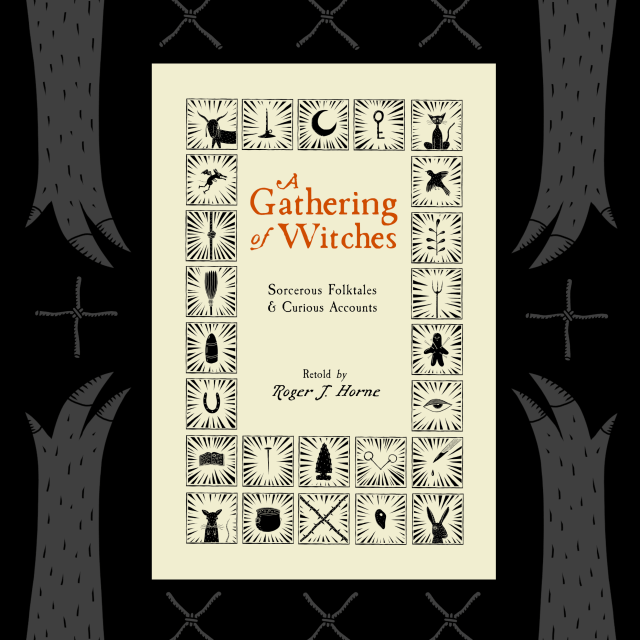
Now Available: A Gathering of Witches – Sorcerous Folktales & Curious Accounts

My latest book, A Gathering of Witches: Sorcerous Folktales & Curious Accounts, is now available via Amazon, and will become available through all other book-type channels and venues in the coming days. This work is a collection of ninety-two folktales of witchery, retold from old tales originating in Scotland, Ireland, Wales, the Isle of Man, the New World, and England, including the distinct Celtic nation of Cornwall.

Many entries here contain old charms and superstitions, rituals and incantations to various ends–both good and ill. For practitioners of the old folk crafts, these stories carry practical knowledge (sometimes hidden in plain sight), folkloric symbolism, and deep, resonant truths that guide us in our ways. But from any perspective, practitioner or no, I find these stories brimming with curiosity and charm. Each tale notes the originating culture, so that we who are the ancestors of these peoples can peer deeply into its symbols and details, rooting more firmly into the ways of those who came before us.

My heart is full of gratitude for the many generations of human voices that have carried these tales forward. They have been told on dark nights, beside hearths and candles and loved ones tucked into their warm beds. They have been told through ages of oppression and greed, cruelty and turmoil, injustice and suffering, much like the times we are enduring now. Nothing, after all, is truly new.

I hope that these stories can bring to readers that old, good, nourishing magic of delight and reconnection with ourselves, of feeling not alone, but endlessly and immeasurably connected in that great cacophony of voices, echoing across the ages, voices that conjure us forward even now, saying: Look. Look here. Look who has walked into this age with you, beside you, within you. Look at these dreams we have kept safe for you. Look, and see what many hands can carry.

Details:
-Paperback
-352 pages
-92 folktales
-Includes 40 illustrations by the author

In this new collection, ninety-two folktales and historical accounts of age-old witchery are reinvigorated with fresh, vivid language and accessible storytelling. The witches here come in many forms, not only the legendary malevolent practitioner of dark intent, but also the village healer, the seer, the wise man, and the conjuror of spirits.

Among these treasures of antiquity, we find the woodland witch who roams the land as a hare, a cat, a bird, or even a deer. We find sea-witches and wind-witches who can conjure gentle gales or dire tempests at will. We find charmers, cunning folk, and white witches who can return curses back on those who cast them. We find accounts of old charms, spells, and talismans that were once the stuff of legend.

A Gathering of Witches breathes fresh life into these folktales of ages past, many from Scotland and the New World, reflecting the author’s own heritage, but also tales from Ireland, Wales, the Isle of Man, and England—including several tales from the distinct witch lore of Cornwall. These stories of various witching folk, considered together, illustrate the ways the lore of witchcraft has spread its branches over time, being both similar and unique across cultures.

A work of love dedicated to the beauty of old witch-lore, A Gathering of Witches is a treasury of tales that capture the long-held beliefs, customs, and superstitions that shaped for previous ages the magic conjured by the word witch.

The Old Christmas–and Its Witchcraft

It should come as no surprise to pagans anywhere today that I insist on the dark tide of winter as a season relevant to many old forms of folk witchery. Whether we call it Yule or Winter Solstice or by any other name, the magic of this season enfolds so many old superstitions, folktales, and charms. But many of the old treasures of folk witchery do not use the word Yule; it is in the folklore of Christmas that we most often find these historic accounts of divination, spells, and spirits.

Most of our ancestors who practiced folk craft observed the rites of Christmas, and despite what many would have us believe, they most likely understood, in their own way, that their favorite Christmas traditions were pagan in origin. Our great-great-grand-somethings were no fools. They knew that the symbols at the heart of Christmas, gathered like jewels in a chest over hundreds of years, were older than the church and its story of the Christ child. They understood that belief and magic are complex and paradoxical at times; that to observe Christmas and to practice our art was not incongruous, but as natural as the complex evolution of the holiday itself over the ages. I’m not advocating for all pagans to embrace Christmas. (I am not even a Christian, so that would be ridiculous.) But for those who are truly interested in forms of real folk witchery alive and active in the early modern period, I am suggesting that we perhaps look beneath the surface of things, lest these treasures melt away from our grasp like snow.

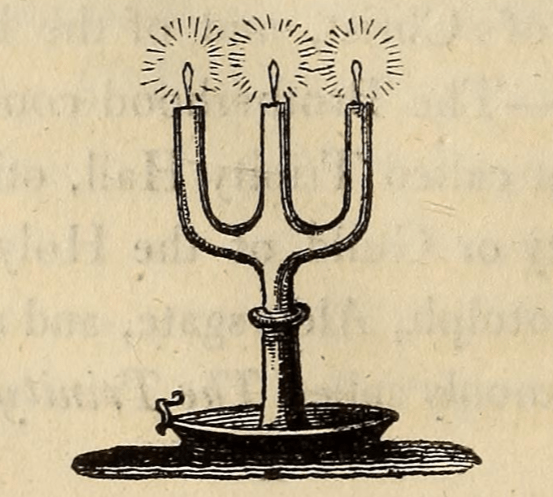
One older practice associated with Christmas that is less prevalent today involves the use of a three-tapered candle resembling a fork. William Hone, in 1823, calls it a “triangular candle,” and provides the following illustration of its form:

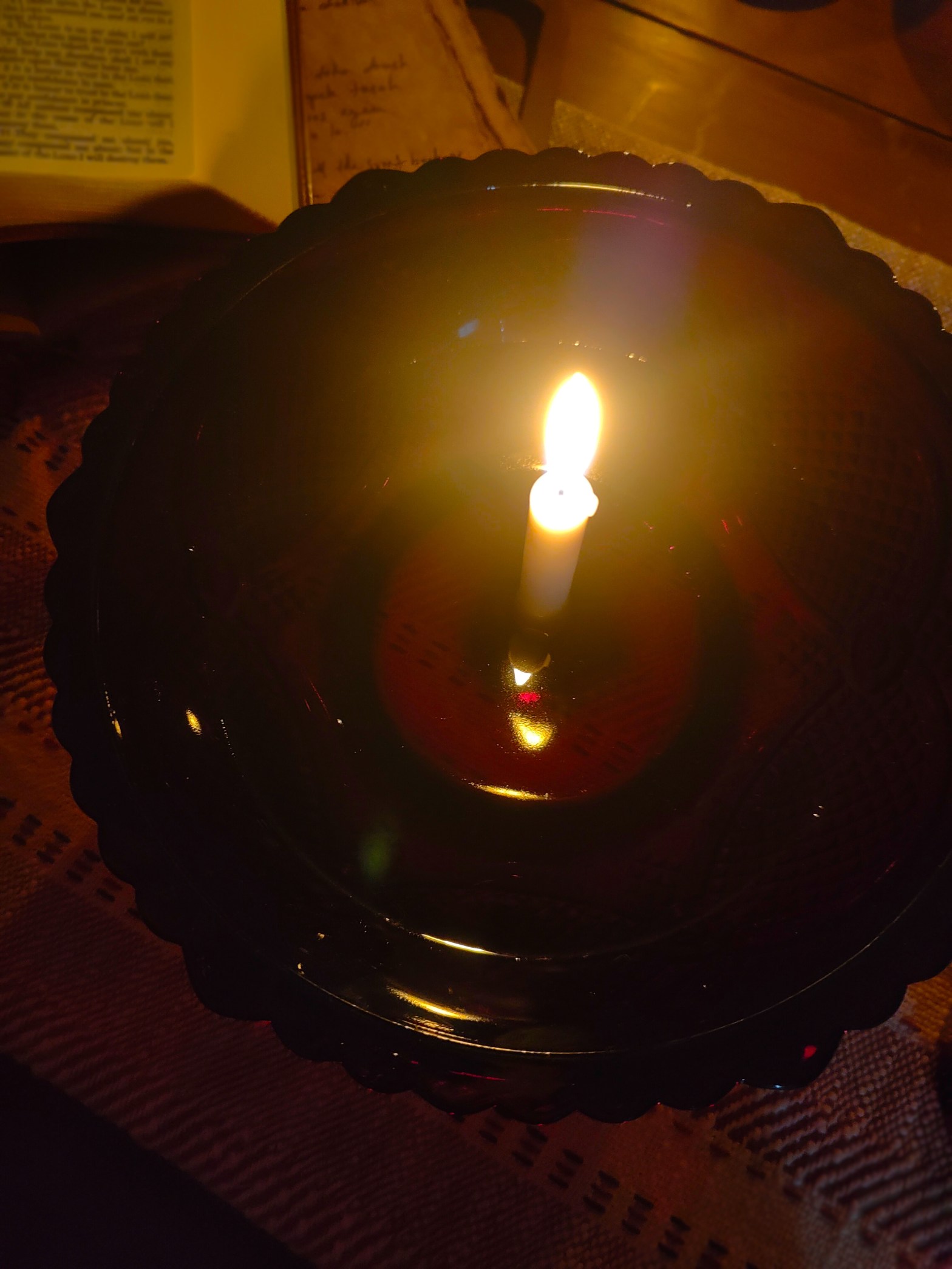
Hone attests to the use of this candle as a part of Easter celebrations, but Thomas Hervey, in 1837, describes its use among the Irish peasantry, insisting that they were lit as “Christmas candles,” with garlands of evergreen strung around them as a kind of replacement for or extension of the Yule log. Their lighting was observed with serious ceremony, and once the three prongs had burned down into one, the remaining single-wicked candle was saved for use later in divination by gazing into its flame.

Even today, the Christmas candles adorned with evergreen garland, which are often lit in sequence relating in some form or another to the nativity story, are actually a modern iteration of the Yule log. Whereas poor and rural families gathered about the log burning in the fireplace, wealthier households began lighting candles decorated with garland as a kind of posh replacement, and it is this tradition that gave way to the decorated candles so many place as the centerpiece of the Christmas feasting table, with or without knowing that this is, in fact, the Yule log around which they gather.

Some of the old witching traditions of Christmas call on ancient spirits in the form of saints and legendary pseudo-biblical figures, not the least of which being the three Magi, whose names are Balthazar, Melchior, and Caspar. The consecration of Three Kings Water on the Twelfth Night is a well-known tradition of Scottish origin, this water being used to bless doorways and persons for protection throughout the year. In a broader sense, though, there is something exquisite in the survival of these three sorcerers of the ancient world in Christmas traditions, allowing us as charmers, conjurors, and cunning folk an entry point into a celebration that can feel, on the surface, very Christian. The rituals and lore of the three Magi are emblematic of the path of sorcerous folk through this holiday long before us, like a sign left along a winding trail, a clue hinting that even serpents may celebrate the luminous star that shines on this night–if perhaps in our own shadowed ways.

This is not to mention the mountains of specific charms performed, traditionally, on Christmas eve or Christmas day. Scot (1584) describes a talisman called an Agnus Dei or lamb cake, which is made from wax, balm, and holy water. The talisman is said to protect against all manner of woes, both natural and unnatural, and to ensure blessings when carried on the person. Inside of the wax is placed a small roll of parchment containing the following written charm:

Balsamus & munda cera, cum chrismatis unda
Conficiunt agnum, quod munus do tibi magnum,
Fonte velut natum, per mystica sanctificatum:
Fulgura desursum depellit, & omne malignum,
Peccatum frangit, ut Christi sanguis, & angit,
Prægnans servatur, simul & partus liberatur,
Dona refert dignis, virtutem destruit ignis,
Portatus mundè de fluctibus eripit undæ.

Likewise, the “waist-coat of proof” charm was said to have been worked on the evening following Christmas Day. It functioned as a wearable talisman, embroidered on an item of clothing, which would render one protected from bodily harm. The embroidered image is interesting for its resemblance to many two-headed figures, including Janus. One head wears a hat and a beard, and the other a crown, but with a beastly, frightening face. The charm, it is said, must be embroidered onto the cloth “in the name of the Devil,” which is a common phrasing in Scottish witch-lore.

But none of these sorceries, even the decidedly heretical ones or the clearly pagan ones having nothing to do with Christ, are available to us if we eschew everything labeled “Christmas” instead of “Yule.” We cast them away, despite hundreds, perhaps even thousands of years of magical tradition at our fingertips. Some of the old witching traditions of Christmas are almost completely forgotten, replaced by “Yule sabbat ritual kits” that can be purchased on the internet and paint-by-numbers-style witchery guides with no thought to the cultural origins of our magics and the generations who preserved them for our use. And so, I believe it is worth exploring where the modern pagan dislike for the word “Christmas” comes from, if only to understand how we arrived at this place.

The most obvious culprit, in my opinion, is the hateful and abusive form Christianity often takes today. How dare we take “Christ out of Christmas,” they cry out, and yet, without Christ, there is still a tree, still an ancient, sorcerous spirit who descends down the chimney, still mistletoe and holly, still lights, logs, and candles, still songs and drink, still gifts and mirth; there remains, in the complete absence of Christ, everything that made Christmas what it was to begin with, for the season we know was, in fact, already old when Christianity was young. For those who have suffered trauma in their youth at the hands of Christianity, it is perfectly understandable to want nothing to do with the thing.

Unfortunately, the pagan distaste for Christmas also comes, in part, from disinformation, especially from the common claim among modern witchcraft traditions that true witches do not and cannot celebrate Christmas. This is not only untrue, but harmful to the preservation of our traditions, for the modern forms of pop-witchery and insta-craft will always lack (in my opinion) the elegant simplicity of the old charms and rituals of the season, even if those treasures are described in our lore as “Christmas superstitions” and not explicitly as “Yule rites” (even if that is what they truly are beneath appearances). In order to recognize these treasures of craft for what they are, we must see the word “Christmas” through the long, wide scope of history–not as a single story, but as a cacophony of echoes having more to do with tradition than belief. In short, it actually matters very little to the folk witch whether there is “Christ in Christmas” or not, for the living heart of the season is the same.

And the heart of the season is not only one of light, but one of darkness as well. It was Charles Dickens who referred to Christmas eve as the “witching time for story telling.” Tales of spirits, ghosts, and other creatures who thrive in the dark time of the year were commonly shared around the fire on this night for hundreds of years. Puritans in the new world attempted to stamp out the custom, for it smacked of the old superstitions. They failed, however, as evidenced not only by Dickens’ ever-popular A Christmas Carol, but also by the works of Washington Irving and many folklorists who preserved the old darkened tales. The resurgence of Krampus traditions is perhaps one of the most prevalent examples of an old, lore-preserved spirit associated with Christmas, but there is also La Befana, who is said to be an old woman who offered the three Magi directions as they searched for the Christ child, and who has now become a kind of sorcerous Christmas spirit who very obviously resembles the early modern image of the witch. Frau Perchta plays this role as well, though in a more terrifying capacity, for the long knife she carries is used to punish naughty children by gutting them.

But the most obvious example of a thriving Yuletide spirit is Santa Claus / Father Christmas / Saint Nicholas himself, who is, of course, the very image of a sorcerer, embarking upon his flight across the night sky, transvected with the aid of his trusted magical steeds, entering houses through chimneys and key-holes, laying his gifts beneath the shrine of the illuminated evergreen tree. And it is beneath this altar that we leave our spirit offering to nourish him, consisting perhaps of milk and cookies or various other things, depending on tradition. This tree is a symbol of endurance through the bitter cold, a totem to bring joyfulness in the dark, a fetish to conjure what is outside us within us, to embody the ever-vital qualities of those green winter forests. It is the shrine around which so many still gather, even if they no longer recognize the language it speaks. Somehow, we still feel its potency without even trying, perhaps by instinct or some ancestral twinge of magic that stirs within us, whether we will it or no.
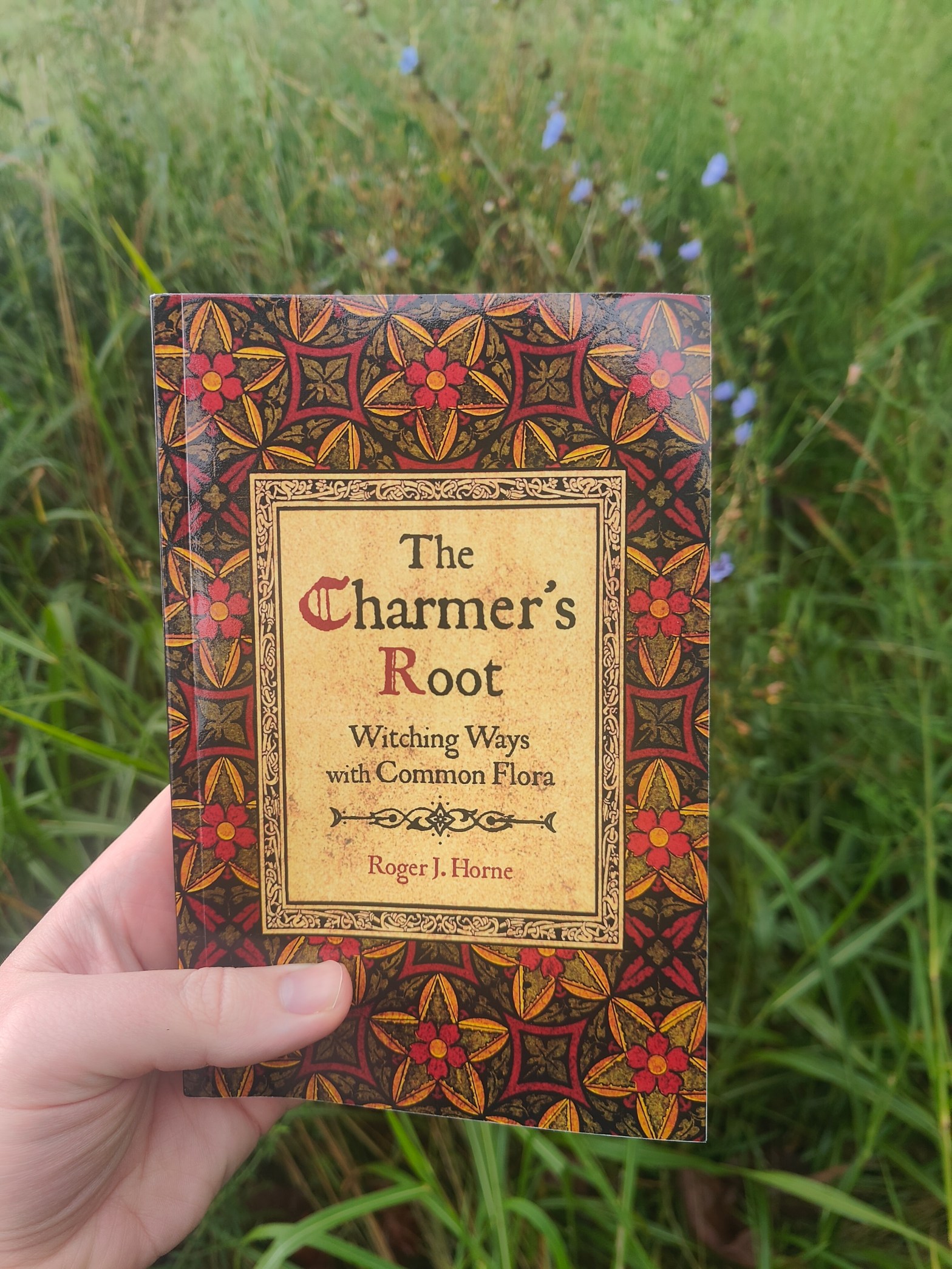
Now Available: The Charmer’s Root

At long last, after what feels like an eternity of testing and retesting old recipes and editing entries on plant lore, The Charmer’s Root is officially available. While I love the process of weaving together a book from my old notes and folkloric research, this journey has come with more peaks and valleys than most. It’s the culmination of a long project, one that has in equal turns been thrilling and exhausting, but one that I think offers a unique window into the animist folk ways of working with plants that are not rare, difficult, or expensive, but common and abundant in North America and the British Isles, green allies who are easily found and befriended on a walk through the field, but who are also ancient and celebrated in the magical lore and texts of previous ages.

Years ago, I would never have expected to undertake writing an herbal. My approach to this aspect of the charming arts has never looked much like the most popular approaches in modern witchcraft books. I tend to favor folklore over correspondences, since for me, plants have personalities that are complex and difficult to capture in keywords. I prefer having a deep relationship with a small number of plants rather than a limited knowledge of a great many. I prefer simple herbal recipes and charms that are deceptively easy to perform over formulae that call for far-away ingredients and drawn-out processes. Most of all, while I enjoy growing plants from seed, I also enjoy foraging, since scouting out local flora is, for me, a way of connecting to local spirits. Over the years, I have realized that these preferences of mine are shared among many folk practitioners, and they are woven into this book, an approach that I have tried to define by its focus on intimacy, gentle spirit work, a reverence for local flora, and a love of folklore.

It was important to me that this book be both practical and grounded in historical magic and lore. The first section of The Charmer’s Root describes techniques for meeting the plant spirit, discerning its various magical signatures and personality, researching folklore, and performing a series of simple rituals for spirit communion, conjuration, offerings, adaptable charm-work, and ecstatic spirit flight via unguent or potion. The second section is made up of recipes, including the familiar traditions of infusions, tinctures, and the like, but also spirit waters, salts, inks, and other preparations that allow the practitioner to work with even poisonous plants in a safe way. The third section contains 36 folk-magical entries on common plants, as well as an index of over 200 plants drawn from Victorian texts.

The Charmer’s Root is available now via Barnes & Noble, Amazon, and other major book retailers, or you can order a copy through your favorite local bookstore.

Plant Folklore: Three Spring Herbs

With the warm months upon us once again, many of us have begun noticing the return of familiar plants around us. While we witches are quite fond of our mugwort and wormwood and nightshades (myself included), we sometimes overlook the plant allies that thrive all around us and are quite literally bursting forth to greet us outside our door. The folklore of these plants is just as vast and ancient as any mandrake, and what’s more, if you live in a place with freezing winters, they probably grow where you live.

Disclaimer: I’m not recommending medicinal use, ingestion, or any interaction with these plants that would risk your health. Folk magic with plants need not involve ingestion or even touch, necessarily. Before working with any plant, consult a trained herbalist and a medical doctor to make sure it’s safe for you.

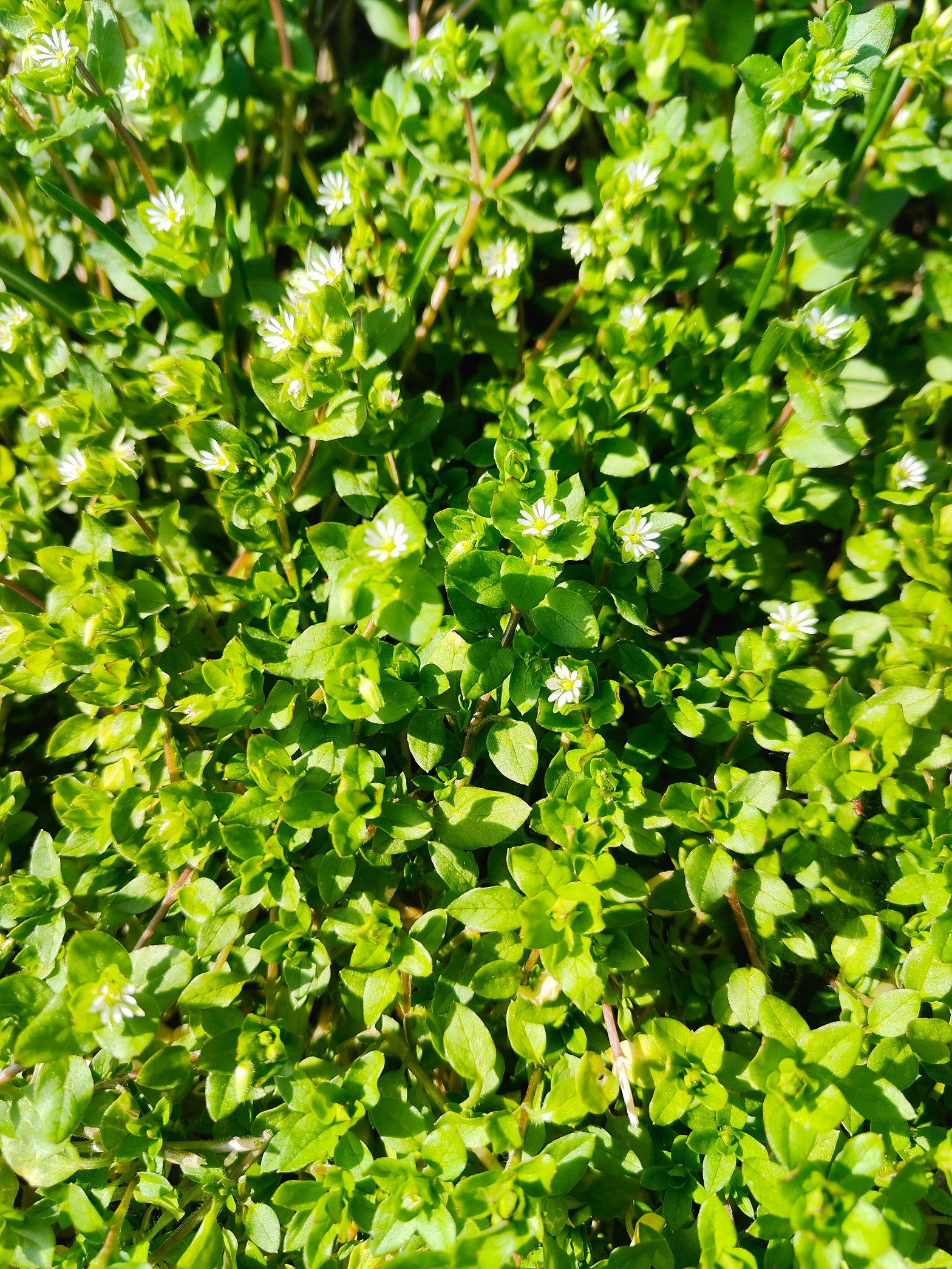
Chickweed has long been associated with the spring and with renewal due to its uses as an early spring tonic for hundreds of years. Its folk names (starwort, winterweed, birdweed, chickenwort, and others) tend to echo three specific aspects of its nature: being associated with chickens and other birds, the night sky, and the cold months of the year.

That chickweed is generally known as a friendly, nourishing plant spirit should hardly come as a surprise. Chickens can be seen to forage for this herb at the first signs of spring, feasting on its crunchy, water-filled stalks and leaves in order to help their bodies recover from the long stint of winter, which usually provides little fresh vegetation. This plant’s long association with chickens provides another key to its nature, for the common hen is a longstanding companion and ally to humans living in rural areas, offering eggs in exchange for protection and care. Most of us know the egg’s associations with spring and with the vernal equinox, and as one of the first plants that stimulates the hen’s system at winter’s end, chickweed can be considered an ally in egg production.

Because chickweed plants tend to grow together in great, intertwined masses, it is sometimes associated with relationships and community. The fact that it is also beloved by hens, who live their entire lives surrounded by a tightly bonded flock, emphasizes, in my view, that the type of love embodied in this plant is more communal or familial than romantic. This is perhaps splitting hairs, though, since bonds of mutual care can express themselves in a variety of ways.
The older name for this herb, starwort, appears to be inspired by its pale flowers, which resemble small stars peeking out from the wet spring ground. Interestingly, the leaves are known to shift their posture by night, closing their leaves slightly around the tips of their stalks to protect new growth from frost, an adaptation well-suited to the cold environments in which it thrives. This may be the root of its occasional folk name tongue grass, though this name is also applied to other plants as well. This nocturnal movement and star-emblemed appearance suggest that this herb is possessed of a strong lunar nature, being an earthly reflection of the starry night sky that mirrors cycles of sleep. The juice-filled body of this herb has long been associated with comfort and soothing due to its myriad medicinal uses.

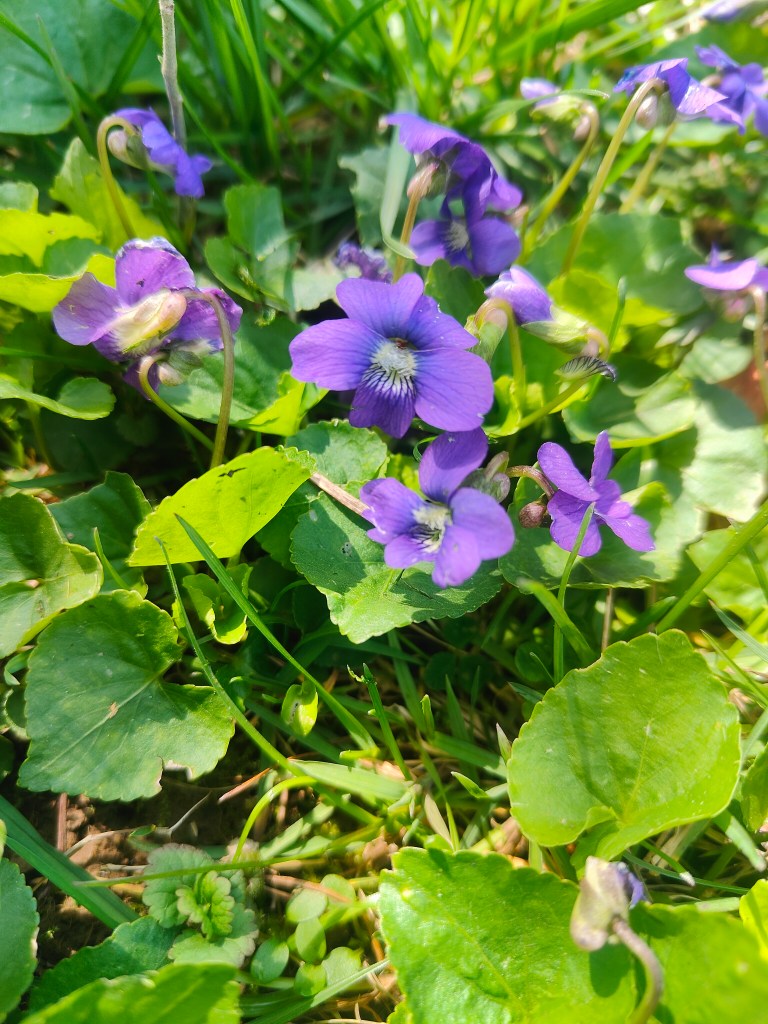
Violet‘s most famous quality is the gentle fragrance of its flowers, which have for hundreds of years been used as a perfume ingredient and as a culinary one as well, the fresh flowers being made into jellies, syrups, and candies. Here we must differentiate between the sweet violet (viola odorata), which is scented, and the dog violet (viola riviniana), which is unscented, though no less beautiful. The greater part of the plant’s folklore is likewise related to either the sweet scent or the vivid color of violet flowers, which have been associated with love and desire, but also with the qualities of concealment and secrecy. These qualities are embodied in the plant’s tendency to go unnoticed due to its preference for shade and its short stature, being easily overlooked so low to the ground in its favorite sunless patches.

The violet was prized in ancient times, even mentioned in legends as a perfume used by Aphrodite in order to win the adoration of Paris. Even hundreds of years ago, violet is noted as a “bridal flower” often included in the celebrations of marriage. In the spring (and sometimes autumn), the flowers of the violet are strikingly beautiful and fiercely colored, attracting early pollinators to partake of its sweetness. The heart-shaped leaves of the violet appear in the folk magical practices of many cultures, being pinned or sewn to clothing or simply carried to attract love and harmony.

This plant’s Victorian associations with modesty are distilled in the common phrase “shrinking violet,” used to refer to persons plagued by shyness. In actuality, the mythic origins of this association have less to do with shyness and more to do with arts of concealment for the sake of defense and protection. Its Greek name is supposedly derived from Ion, taken after the nymphs of the ancient region of Ionia. Myth tells us that Diana, goddess of the moon, transformed one of her nymphs into the violet flower in order to help her escape the (presumably sexual) pursuit of her brother, Apollo, god of the sun. Alternately, legends say that Zeus transformed the priestess Io into the form of a cow in order to escape the wrath of Hera, and the first plant which sprung of its own accord to feed her was the violet.

In both of these tales, the violet embodies a potency of concealment that is sometimes necessary and useful, especially to those pursued by vengeful lovers and dangerous predators. These myths, as well as the violet’s love of cool shade, were often interpreted in Victorian flower-lore to suggest a symbolism of modesty, shyness, and reserve. The violet’s true potency in this aspect, however, lies in the concealment of what is beautiful and vulnerable for protective purposes.

Though the scented and unscented varieties of violet are sometimes confused, both are closely related and bear similar magical properties, though the sweet violet’s uses are perhaps more potent in workings of an amorous nature than the dog violet.

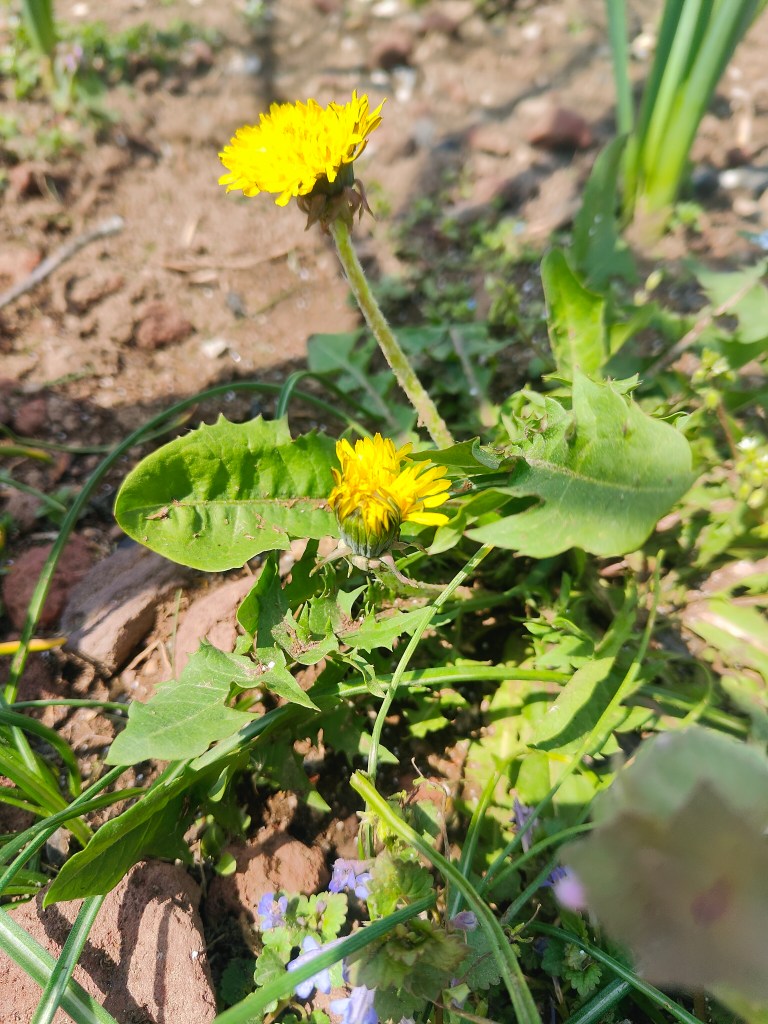
Dandelion’s folkloric associations are vast and quite old, and its myriad uses reveal this plant to possess a great many aspects, some of them seemingly paradoxical. Its properties tend to revolve, however, around a few central points: its associations with wish-making and divination, its surprising connection to both solar and saturnine powers, and its “toothed” properties as a protective plant.

The humorous names piss-a-bed and wet-a-bed are referenced in herbals as early as the 1600s, owing both to its diuretic properties and to the staining pigment in the bright, golden flowers. It is common even today for children to prank each other by rubbing the flower heads on one another’s skin or clothing, resulting in a stain that doesn’t really look much like urine, but makes them giggle nonetheless.

Vulgar names aside, dandelion’s most commonly known use in folk magic stems from its round, tufted head of seeds that emerges after the flower has closed and matured. For this reason, it is sometimes called blowball. In folklore, the blowing of dandelion seeds (very much like the blowing of thistle seeds) is performed for a variety of purposes. When making a wish, the goal is to blow as many of the seeds as possible into the wind to encourage the desired outcome. In divination, the number of seeds left on the head after blowing is interpreted in a variety of ways: yes or no answers (many or few seeds remaining), the number of days until a specified event will occur, or the number of years left in one’s life.

This last usage emphasizes an important aspect of dandelion’s nature, being both a solar herb, possessed of the joyful and wholesome potencies of the sun, and a saturnine one, associated with the chthonic realms and the spirits of the dead. While the dandelion’s flowers mirror the form of the sun, it grows a long and deep taproot, reaching into the dark earth below to a greater extend than other plants of its size. These roots twist and wind in a manner similar to mandrake. That this plant is an intermediary between realms is also signaled by its wind-blown seeds, which give away its mercurian and psychopompic qualities. Dandelion’s personality is such an interesting contrast, being both joyful and macabre at the same time.

The very name dandelion is derived from the French dent-de-lion, referencing the tooth of a lion. This moniker is owed to the shape of its leaves, which are jagged in the manner of a cat’s teeth. Although its uses in contacting spirits, divining guidance, and wish-making are all well-known, this plant has a strong protective quality to it as well. We would do well not to mistake the dandelion’s cheerful demeanor as being entirely passive (or toothless).

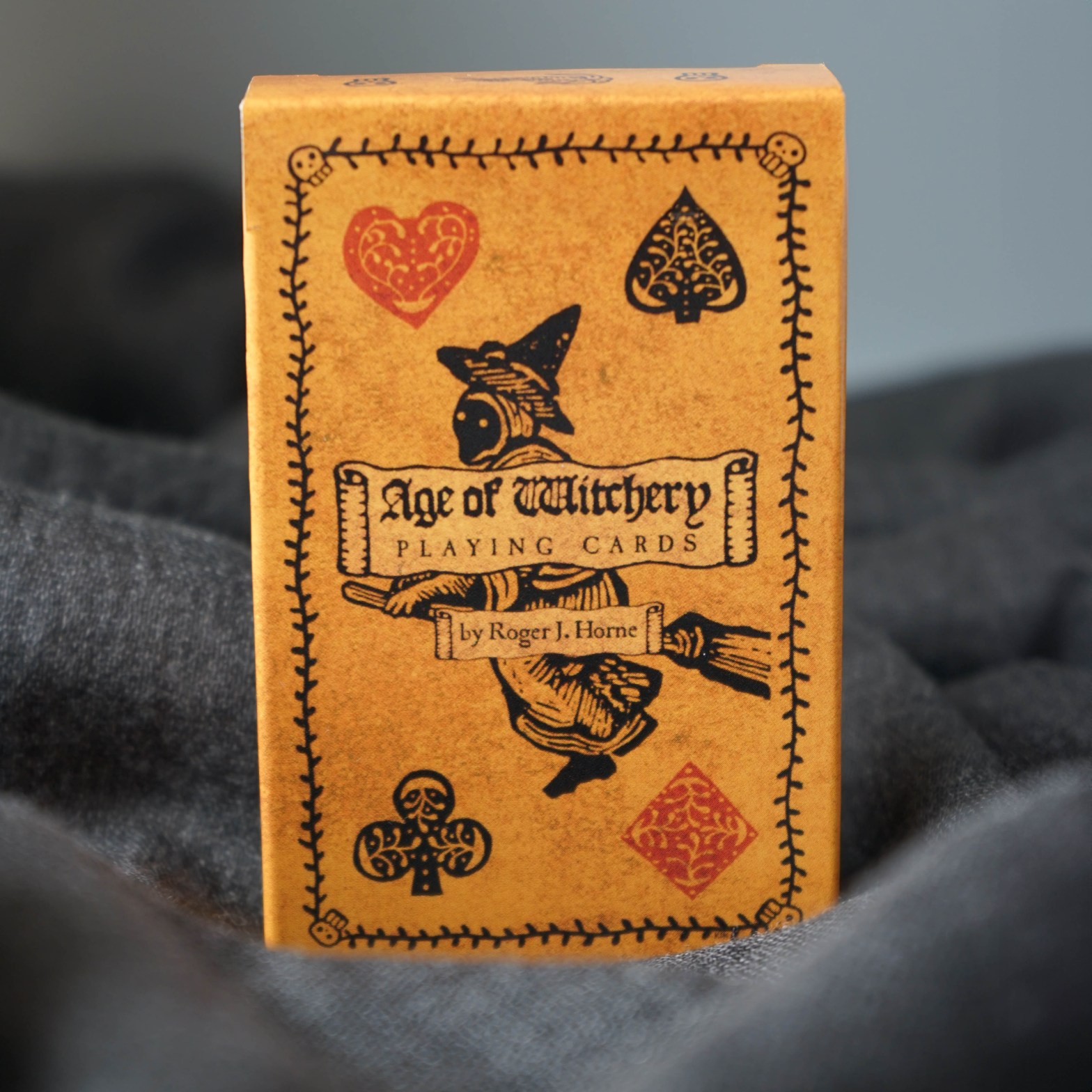
Announcing the Age of Witchery Playing Card Deck

Purchase the deck here.

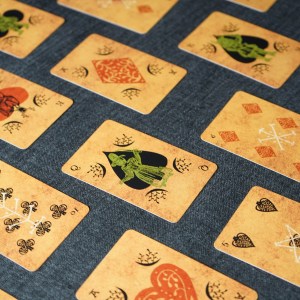
When I set out to create the Age of Witchery Tarot Deck, I of course knew that there would also be a playing card iteration of this project. Playing cards are, for many, a more earthy, flexible tool for divination. Playing cards offer simple patterns of suit and number and dual coloration of red and white instead of the complex imagery of the trump sequence. Like tarot, readers rely on the oscillations of symbols in order to form meanings, but unlike tarot, the playing card deck feels somehow humble, down to earth, and deeply practical as opposed to lofty and philosophical.

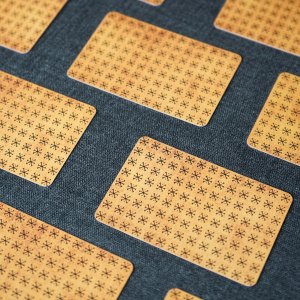
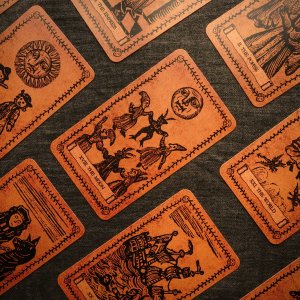
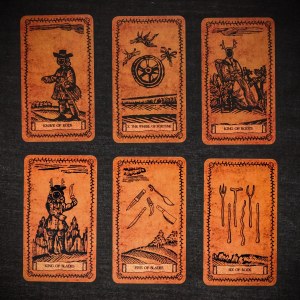
Like the Age of Witchery Tarot, the Age of Witchery Playing Card Deck draws on adapted woodcuts from the 1700s alongside my own illustration work. I ultimately decided to create a bridge sized deck (2.25 inches by 3.5 inches), which is slightly narrower than poker sized cards (2.5 inches by 3.5 inches). I like this size simply because you can fit more cards comfortably on a smaller surface. I chose to maintain the black and red coloration, but with the addition of green in the black court cards or face cards, creating more visual contrast for the sake of the reader, who is often scouring a spread for patterns and reflections between cards. While I wanted to maintain the weathered, antiqued background of the Age of Witchery Tarot, this needed to be lighter and brighter on such small cards for ease of readability, resulting in an amber color that is similar, but different from the rust or leather color on its sister deck. Like its sister, this deck of cards comes with a link to a digital guide, including a bit of history, interpretations, and spreads.

The two distinct features of this deck that will stand out most to cartomancers are its reversibility and the inclusion of numeric glyphs. Each card is designed so that it is truly asymmetrical, meaning that one can tell if the card is upright or reversed. Many of us, of course, choose not to read reversals, but I wanted this deck to at least offer the choice rather than ignore the question entirely. The numeric glyphs that appear on the number cards are unobtrusive, but clear visual cues derived from both the number of the card (usually translated into a number of lines) as well as the subtle symbolism of basic geometric configurations and their relation to witchcraft. The benefit here is that one can, of course, simply read the number on the card, but with such small cards, one might also rely on quickly recognizing these geometric forms by candlelight, a cross signaling four, a line signaling two, a tree signaling ten, and so on.

This may sound like a simple thing, but I’m particularly proud of the suit symbols as they appear on the minor cards. This was one of the most difficult choices because I did not want to substantially change them, but I wanted to breathe into them the same aesthetic and flavor of the Age of Witchery Tarot. They are each designed in the style of woodcuts, featuring delicate cut-outs of vines and moons. The cards are printed, of course, and not pressed with wooden blocks coated with ink as they would have been hundreds of years ago, but designing in this style gives the cards a feel of something older than themselves, connecting the deck, which is admittedly modern, to older designs and methods that came before, like part of a living tradition.

For now, the Age of Witchery Playing Card Deck, like its sister tarot deck, is available via PrinterStudio, which also offers bulk order discounts so that retailers may profit from sales.

May your cards be ever sharp. Order your deck here.

Faces in the Deep: Four Ways of Reading Tarot Court Cards

Let’s just say it, shall we? Cartomancers disagree on how to read the court cards. Attend a tarot workshop with one reader, and you’ll be trained in one method. Read a book by another, and you’ll encounter a completely different system for understanding these characters. I’d like to unpack a few different approaches here in broad terms, but not in order to place any value system upon them. On the contrary, what I’d like to say is really this: that each approach to addressing court cards has its own strengths and weaknesses, and it is the intuition and style of the reader that will determine which method is most appropriate. In knowing ourselves, we will come to know what the best method of reading is for us; this is true in many ways, and it is certainly true of approaching the royal families of Fate’s wheel.

One of the oldest methods that doesn’t enjoy as much use today is to interpret the court cards as persons in the querent’s life who have certain physical characteristics. In this system, Queens are women, Kings are men, Knights are youths (of any gender), and Pages or Knaves are children (again, of any gender). The suit is often used in this style of reading to determine other physical characteristics in a variety of ways. Coins might indicate dark features, while Rods indicate red hair, for example. Sadly, this system leaves out gender queer or non-binary adults, and the problems we run into when associating cards with ethnic attributes also become clear rather quickly. It’s estimated that anywhere from 80-90% of people in the world have brown or black hair, and yet only one or two of the suits are devoted to this quality? Instead, readers who subscribe to this method might use the suit to indicate a person’s size, height, or physical mannerisms in some way. What we really should not do here is read physical characteristics and personalities as correspondences, for having blonde hair doesn’t make a person adventurous (or any other thing) by nature. The benefit of this method is that we are able to describe a person quite physically, but the drawback is that we have less information regarding their inner qualities. This problem can be mitigated, though, by reading the cards surrounding the court card for more information.

This brings us to the most popular method today for interpreting the court cards: as people in the querent’s life with certain archetypal or astrological personalities. Instead of associating a particular card with a person’s bodily presence, we are reading it entirely as a set of non-physical qualities. The Queen of Coins might be anyone who in a querent’s life who is possessed of a very nurturing quality, regardless of gender. The Page of Cups might be any person who is highly in touch with their inner child and sense of wonder, regardless of their physical age. This approach is helpful because it focuses on how the querent perceives the people in their life and their relationship to them, and it emphasizes the gifts (or, alternatively, burdens) they have to share with the querent. Problematically, this system can also describe people the querent hasn’t noticed, or it may be describing a person they know quite well using qualities that make sense, but don’t immediately “click.” The querent might say, “Oh, hmmm, I guess that description really does fit John better than Sarah.” Still, the time spent trying to pinpoint the court card’s identity in the querent’s life can be a bit frustrating, distracting from other, more important topics.

Finally, we come to my two favorite methods, both of which completely abandon the idea of court cards as external persons. I think both of these methods have grown more popular in recent years. The first of these posits that court cards do not represent people in a querent’s life, but rather, represent spiritual influences along a particular stretch of their journey. For example, the appearance of the Knight of Rods might be guiding the querent to be more bold and assertive in matters of their career or creative projects. Likewise, the Page of Swords might be offering the suggestion to be more adaptable in the face of a current struggle. These are not people, or even aspects of people, but are read as spiritual guides who answer the call of the spread and decide to offer their wisdom in the moment of the reading. The benefit of this reading style is that we can cut to the heart of the matter rather quickly, avoiding the game of “who’s who” and dealing instead with the more crucial question of what is to be done next at the current crossroads of their life.

Lastly, my very favorite. (I’m more than a little biased, of course.) This method reads the court cards as aspects of the querent’s own self, however hidden, underutilized, or unfulfilled. If, for example, we meet with the King of Cups in the releasing position of a three-card spread, we might interpret that the time to draw on our inner philosopher is not now. This is, perhaps, a time to let go of worrying about inspiring others or influencing them with our grand ideologies, and instead to focus on something else. If we meet with the Queen of Rods in the central position, we might interpret that we are, in the present moment, called to rely on our social skills, our charm, and our ability to navigate power structures. This is different from the previous method in that the presence of these cards here indicates that the querent already possesses these gifts, or is in the process of acquiring them. These presences are not external spirits or guides showing up in the cards, but are in fact powers alive within the querent themselves, often as a seed waiting to be realized. In fairness to the other methods described above, I must point out the downside of this approach: that our reading, in focusing entirely on the querent’s sphere of influence, can be misinterpreted to suggest that they have the power to reshape any circumstance in their life, which isn’t true. The querent cannot simply will their way out of poverty, disease, or a broken heart. On the other hand, we cannot leave a querent feeling entirely powerless, for that is also a lie. The querent always has some power, however small (or, more often, only seemingly small). My chosen focus, as a reader, is on empowering the querent with choice and self-knowledge, even if those choices are limited, because dwelling on things outside of our control–well–it just isn’t very useful, is it?

Ultimately, it isn’t really necessary to dedicate oneself to one of the methods above. Readers often synthesize more than one system, which is as it should be. But it is important, I think, to conduct a self-inventory from time to time, to reflect on how we tend to read the court cards and why we find ourselves drawn to that approach. If, in reflecting on this question, we aren’t really sure, then perhaps that is an opportunity to experiment with a different method. After all, it is in the experience of giving readings that we find what works well for us and what does not.

To Abate the Bitter Cold

The latter half of winter is a time of weariness, isn’t it? The Yuletide season is over, and without its glimmering lights and spirit of warmth, the darkness and cold stare back at us with their hollow gaze. We’re full of ache and sleep, not quite ready for the return of summer, but also tired of winter’s gray. It is for this very reason, in part, that the folk traditions of Candlemas and St. Brigid’s Day endure: to abate the bitter cold with arts of prediction and illumination.

I’ve said it before, and I’ll say it again: there is no conflict between Christian folk traditions and old folk witchery, for these practices are deeply enmeshed and entangled. The difference often lies only in the manner of approach. While Christian observation of Candlemas or St. Brigid’s Day stems from a deep belief in Christ, folk witches often include the magical aspects of these traditions in the spirit of heresy and subversion, for the pagan incorporation of liturgy into folk magic was actively punished in previous ages. Other witches regard these traditions more as cultural artifacts that are a part of who we are and where our ancestors come from. Some folk witches even identify Christians themselves, often with caveats and context to help other pagans understand, and for them, these festivals are points in the year that touch both threads of their making: the witch and the believer, both held sacred simultaneously in the moment of ritual. All of these approaches are beautiful and valid and worth preserving today, for hundreds of years ago, all of them would have been echoed by our ancestors, who surely had varied and complex feelings about the ways pagan spirituality mingled with the growing power of the church.

Candlemas, celebrated in churches as the Presentation, is also a time to bless candles for the coming year, and this is one of the traditions incorporated into folk witchery to this day. It aligns closely with St. Brigid’s Day, reminding us of the pagan roots of many of our traditions. For cunning folk and other charmers in the early modern period, candles brought home with a liturgical blessing on this day were believed to hold a special potency, and the uses for these candles weren’t always aligned with the intentions of the church. Similarly, witches today may choose to bless their own candles for magical use in any number of ways. In recent years, I’ve grown fond of calling Brigid’s potency into a single, central candle as I light it, then lighting the others from its wick. Even a single candle alone will do in a pinch. What matters is that the incantatory call is true and the feeling is right. Old words are helpful, too, like the following, adapted loosely from the Carmina Gadelica, a collection of Scottish charms:

I light this flame in Our Lady’s name
to bring warmth to the earth again.
The encirclement of Our Lady
be about this place
on this night, and every single night.

Another adaptation of my own, also drawing on the language of the Carmina Gadelica, names Brigid and Mary:

I will light this flame
as Brigid would, as Mary would.
The encirclement of Brigid and Mary
be about this place, on the household all,
to save, to shield, to surround,
the hearth, the house, the household,
this eve, this night, and every single night.

Groundhog Day, too, in the United States and Canada, derives, at least in part, from Candlemas traditions. On Groundhog Day, it is said that one can predict the weather by observing the reaction of a groundhog as he emerges from his den. If he sees his shadow (meaning the sun is shining), there will be more winter yet to come. If he does not, winter will soon be over. Other, similar traditions rely on different creatures for prediction, including badgers, serpents, or other animals that emerge from a hole in the ground. One Scottish saying offers the connection to the old Candlemas traditions more clearly:

If Candlemas Day be fair and clear,
there’ll be twowinters in the year.
If Candlemas Day be foul and rain,
winter will not come again.

While it isn’t practical for most of us to crouch around a chthonically-inclined creature’s home for hours and hours, we can certainly observe the weather where we live, perhaps even engaging in the fine arts of divination in order to offer some illumination on our circumstances and our journeys. This would be quite in line with the folk traditions of Candlemas.

However you draw on the bright tide of this time, in whatever way your culture and ancestors afford you, and by whatever paths you are called to this art, may your late winter days be gentle and full of hope.

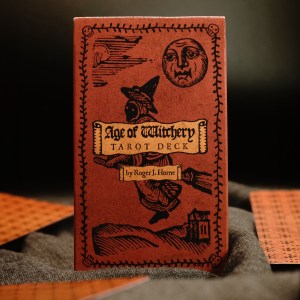
Announcing the Age of Witchery Tarot Deck

Purchase the deck here.

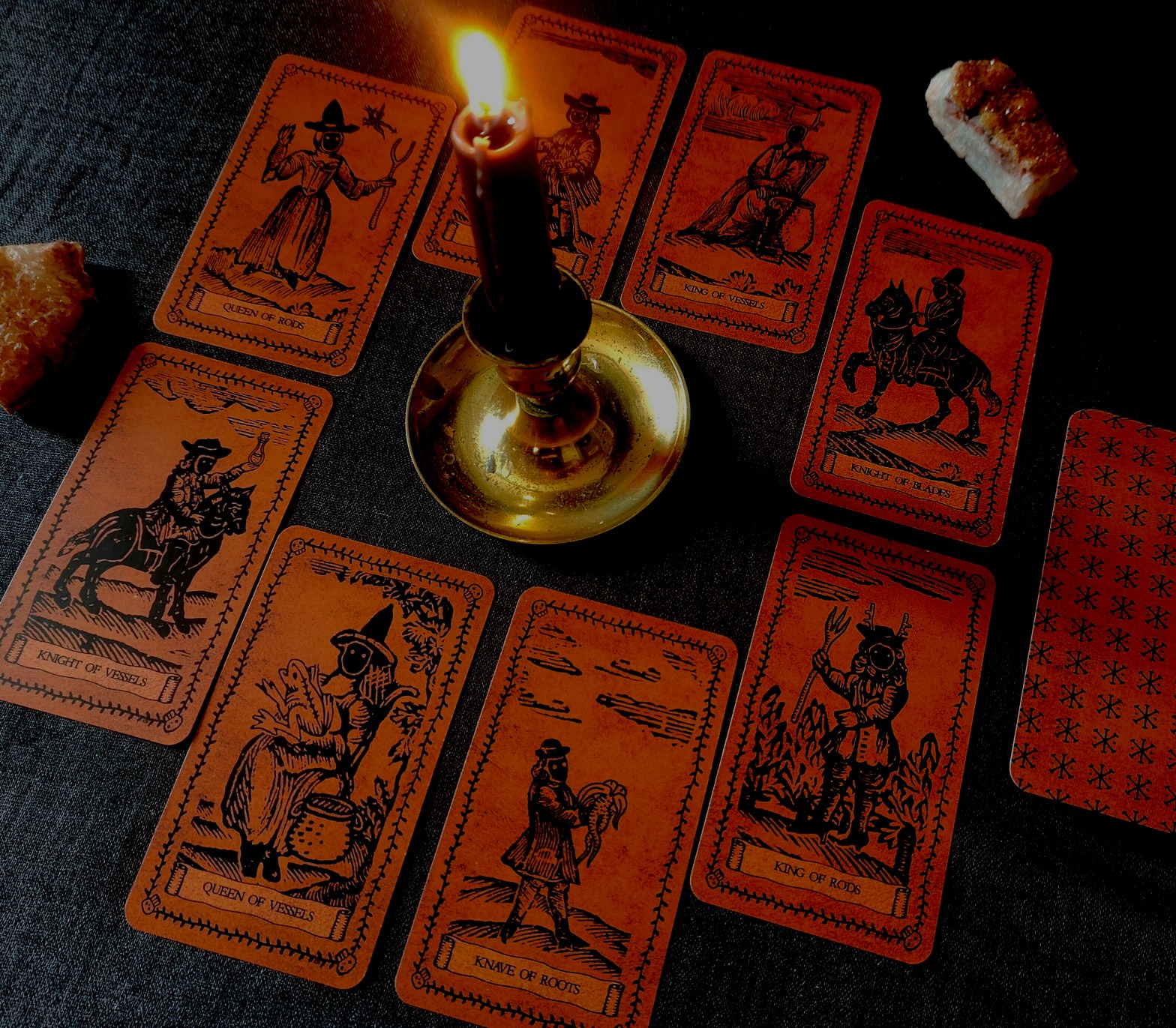
For most of my life, I’ve dreamed of designing a tarot deck. Tarot and cartomancy were, for me, some of my first entry points into the craft I practice now, and divination remains the core of my practice, not merely as a way to gain insight into complex situations, but as a form of contemplation, ritual, magic, spirit communication, and sacred play. Tarot is a language both individual and shared, arising out of symbols evolved over centuries, but wielded with the skill of the practitioner. Working with the cards helps us to understand our own deep needs and desires, which is perhaps the greatest power we can hope to wield in a world that is ever telling us what we should want and who we should be. The spread of the cards before us is like a deep, dark pool into which we gaze, interpreting the ripples along the surface, knowing that beneath lies our connection to the parts of ourselves that are hidden and the spirits that surround us–both light and dark.

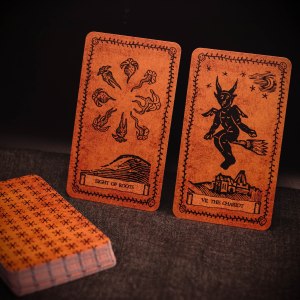
The Age of Witchery Tarot has, in truth, been years in the making. For a very long time, I toyed with illustrations and concepts, filling entire sketchbooks with ideas, but I kept returning to the old woodcuts of the 1700s, the age that bore much of the witch-lore that informs folk practitioners today. These were brutal times for certain, shaped by the fear and loathing of so many things–of women, of surviving pagan customs, of Catholicism, of sexuality, of learning, of spirits, of magic. And yet, within the age-worn images of that time, we see what truly lies at the core of society’s fear of witches: the fear of resistance, the fear of empowerment, and ultimately, the fear of ourselves, the fear that something within our nature is dark and wild, that it cannot be contained by any church or institution, that each of us, perhaps especially the poorest and most marginalized, possesses some hidden power. And although they did not resemble the monstrous creatures witch-hunters imagined, we know of course that there were (and still are) folk charmers, herb doctors, seers, and cunning folk who wielded their magic and divination in previous ages, some of these being my own ancestors, and very likely yours as well, dear reader. Look closely at the superstitions, signs, and folk charms observed in your own family, and you may well find that a bit of the old witchery survives in you. The name of this deck is a play on this thought–for as we modern practitioners know, the age of witchery is not dead or gone; it is now.

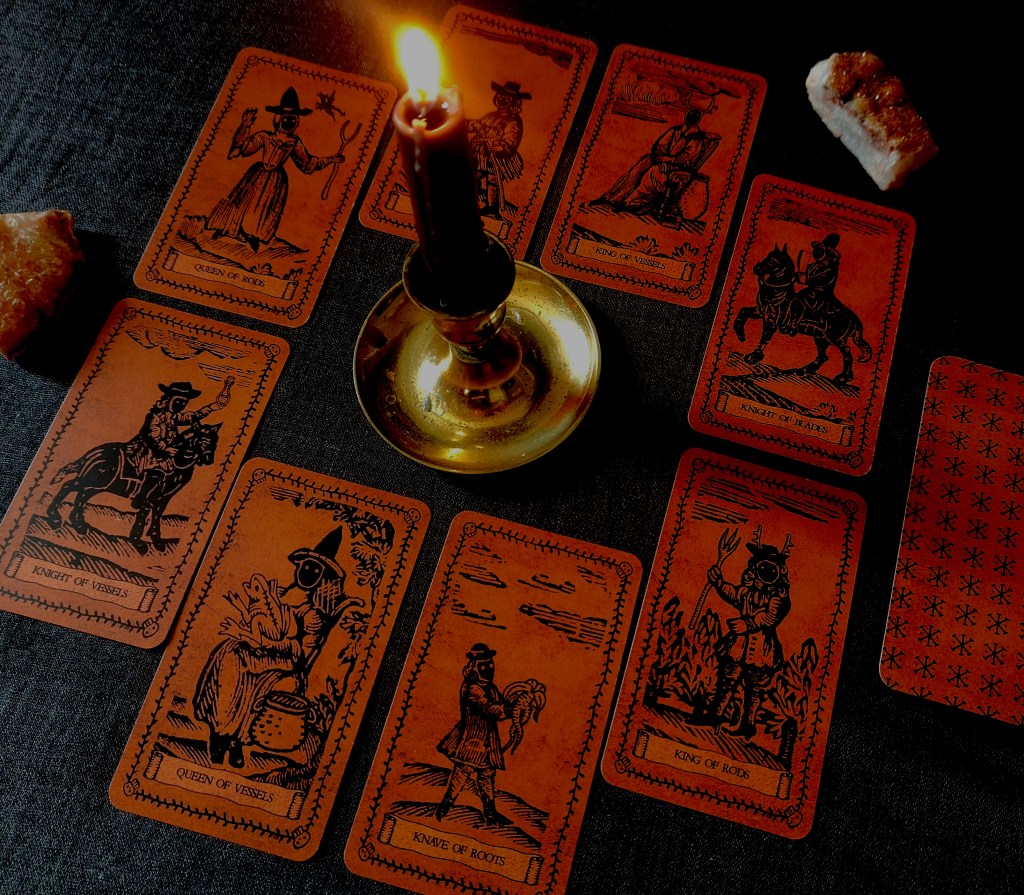
The process of assembling these images was painstaking at times, but also delightful. The elements drawn from 1700s woodcuts are largely collaged together, since no existing composition adequately captured the pieces necessary to form the scenes we know from the Marseille tarot tradition. A single card often required drawing from as many as five or six woodcuts in order to create the necessary details. These collaged compositions had to be edited and embellished with my own illustration work–replacing linework that was unclear or damaged, placing objects into hands, finishing part of an image that was missing or cut off, redrawing facial expressions with something more appropriate to the card, repositioning arms and legs so that the postures of two figures did not look too similar, shrinking or enlarging elements so that they appear to belong in the same scene, and of course, incorporating my own decorative border work. The absence of colored inks did not make this job much easier–if anything, color helps the eye to discern one object from another, and in its absence, I had to work hard to keep the images simple and recognizable so that the eye could easily make out what was happening in each scene. I ultimately chose to preserve simplicity in the minor or pip cards, allowing individual practitioners to choose whether to read them in line with numerology, astrology, the prescribed modern meanings assigned by Waite, or any other system of choice.

I’m proud of the culmination of this long effort, and I’m excited to see how other witches, pagans, and tarot enthusiasts make use of this deck. For now, the Age of Witchery Tarot is available to purchase via PrinterStudio, which offers bulk discounts for retailers so that they may also benefit from sales. If the distribution channels change, I’ll be sure to update all links on my website so that the deck can be easily found.

May your cards be ever sharp, witches. Purchase the deck here.

On Superstitious Folk

The horseshoe hung above the door, the salt thrown over the left shoulder, the clocks stopped in a house where someone has died: all of these have been described as old wives’ tales and, more commonly, as superstitions. For the shrewd folk witch, however, these bits of lore are more than mere archaisms and oddities; they are cultural treasures preserved over generations, often carrying within them a hidden potency, a source that may be tapped in times of need, a magical guide no less valuable than a rare tome.

One of the most common challenges faced by those new to the path of folk witchery is the process of building a personal craft that is specific to one’s culture and heritage. Reading folktales, researching one’s ancestors and their lands, and spending time with the flora and fauna around us are all valuable pursuits to this end, but the sheer practical value of superstition is impossible to overstate. By peering deeply into these treasures–not merely reading them, but contemplating their symbolism–we can derive a wealth of charms that come from who we already are, that are rooted in our very being. Charms of this nature are always, in my experience, easier to access than lofty, ornate rituals because they feel effortless and natural to the practitioner, lending themselves to almost endless adaptation and improvisation.

Take, for example, the blowing of dandelion or thistle seeds (depending on where you are), which is a form of wish-making superstition. To access the hidden potency of this charm, we must look more closely. By means of the witch’s own breath, the seeds of the plant are carried away to germinate and propagate the land. The very breath that speaks the wish is able to accelerate the plant’s proliferation. What better offering could there be for a seed-bearing plant, a being that wants, more than anything, to multiply and thrive? Perhaps we can speak more directly with this plant spirit. Perhaps the spirit can hear us. Perhaps we can analyze the nature of this plant (solar, saturnine, mercurial) to discern what sorts of powers might lie within its nature. Even a simple charm, if it is worked from a place of deep understanding, can be potent.

It was Cicero, in his ancient treatise De Natura Deorum, who originated the word superstitio to describe an overabundance of care in spiritual matters. He contrasted this with religio, meaning proper observance. As is often the case, we see here the concept of improper spiritual practice defined by its deviation from dominant religion. This was no less true for the vehement anti-Catholic sentiments of early modern Scotland, where many executed for witchcraft practiced simple healing charms and folk magics peppered with Catholic influence. It is the new religion risen to power that defines what is “religion” and what is “superstition” for the people. And it is the witch who chooses for herself, heedless of authorities, what is most useful.

For those of us on the folk path, superstitions are usually our earliest education in the magical arts. Many of us have learned from parents or grandparents what objects or signs confer the property known as “luck” (derived from the Middle Dutch luc, meaning good fortune). For our ancient ancestors, whose cosmology was both pagan and animist, fortune came from a host of powerful spirits who viewed human actions as either pleasing or displeasing. It is reasonable to discern from this that having luck, for the modern pagan, means perhaps more than mere serendipity. Perhaps it speaks to having good relationships with the spirits around us, to preserving small rituals and traditions that please them, to procuring, in some small way, their favor–or at the very least, preserving acts that in some way invoke the remembrance of them.

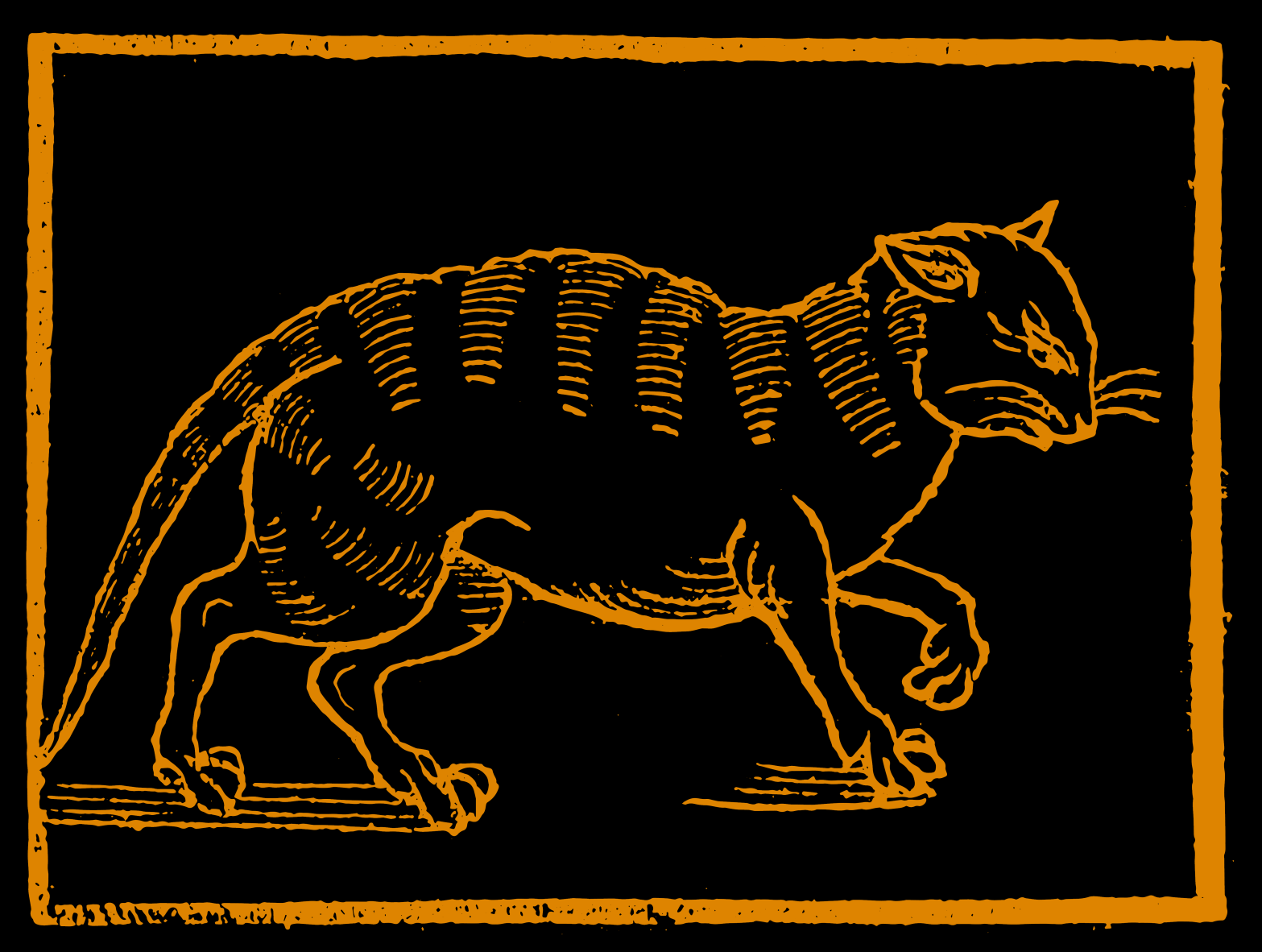
Conversely, and perhaps confusingly, many witches favor signs that may have been traditionally viewed as bad luck to previous generations, usually because these things were associated with, well, witches. In the Appalachian region, black cats have been associated with witches for hundreds of years in traditional lore, and while they have also been viewed as bad luck, many modern witches favor them for this reason. One man’s bad luck may prove another man’s good luck, it seems, particularly for a witch, since part of our very nature is rebellious and countercultural. And really, let’s be honest: black cats are simply precious.

For witches interested in researching superstitions in their own culture, I recommend two things. First, conduct a little exercise in self-inventory. Note the superstitions you remember from childhood, everything from the breaking of mirrors to finding holed stones. Some traditions that may seem mundane to you may actually be quite unique, but without identifying them and researching them, you may be ignoring treasures you already possess, preserved by ancestors from hundreds of years in the past. Second, of course, is the library. Collections of superstitions by folklorists aren’t difficult to find. People consider them amusing, but they almost never actually read them. They’re usually gathering dust on library shelves or sitting unread on someone’s coffee table. It’s a funny thought, actually: so many people wish to know magical secrets, to feel privy to ancient knowledge, to feel empowered, and meanwhile, the magical treasures of previous centuries are just there, so very near–for those who can recognize them.

The Devil We Know

One of the more frustrating aspects of writing about witchcraft is addressing what we might lovingly (snark intended) call “no-not-me moments.” These moments tend to arise when we attempt to say something that is true about our own practices and traditions as witches, and especially when underrepresented currents of craft dare to speak up and describe what we do and believe. It tends to go something like this:

Folk witch: “I often utilize the psalms in my craft. I enjoy participating in the long history of cunning folk who have put these incantations to magical use.”

NoNotMe: “Witches are of the Old Religion. We don’t use psalms or rosaries or anything like that. Stop calling yourself a witch if that’s your thing.”

Now, before we pile on the NoNotMe in this situation (for our instinct, as folk witches, is usually to invoke a much-needed history lesson), let’s consider their perspective for a moment. Let’s be more than fair. They may have had some extremely negative experiences with Christianity as a young person, and when they came into witchcraft, they probably experienced those old shackles falling away. Perhaps they never again thought they would encounter remnants of their painful childhood turning up in their new spiritual world. Perhaps they joined a modern initiatory tradition under leaders who told them, without context or history, what one must do and what one must believe in order to call oneself a witch. These words and rituals were probably prescribed to them regardless of their culture or background, and they were probably written within the last 50 years, but were presented to the new initiate under the guise of a supposed ancient lineage, which made them feel quite special, much like the use of the psalms feels quite special to our folk witch. NoNotMe was probably never informed of the diversity of witchcraft traditions in the world. They were told their tradition was the only one, that all of the others were false pretenders. Given this context, it isn’t hard to understand NoNotMe’s reaction to an element of craft that feels so outside of their comfort zone. NoNotMe isn’t a bad person, even if they are spreading bad ideas.

The problem here is really two-fold. First, NoNotMe believes that their form of witchcraft is the only one. This isn’t new or unusual in any spirituality. How many wars, within Christianity alone, have been fought over who is the “real” believer, the most correct, the most special, the most chosen? The larger issue, and the one that is more difficult to approach, is NoNotMe’s belief that everything that is said, shared, or written about must be, in some way, for them. They cannot imagine a world in which things exist for other people, for folks with different beliefs or preferences or tastes, but not for them at all. This is, in part, the result of a modern information age that tailors all media to our individual likes and preferences, sealing us away in our own little sepulchers of discourse, unexposed to difference. And without regular exposure, difference is uncomfortable. It reminds us that we are not, as we might imagine ourselves, the most worthy, the most correct, or the most special. We’re just like everyone else, really, trying to figure out what works for us and what doesn’t. We’re just another branch on a very large tree.

I’ve been encountering quite a few NoNotMe moments since the publication of The Witches’ Devil last year. They don’t upset me or offend me, but they do make me worry about the broader state of things. Part of the thesis of The Witches’ Devil is the slow and steady incorporation of pagan and animist elements into the character of the Devil over many hundreds of years, not merely the recasting of Pan into the Devil’s role, which is an oversimplification, but the shifting of the inherent symbolism of our thousands of ancient horned deities and regional spirits, resulting in a complex connection between the demons of the grimoires, the old revered daimons and spirits of the ancient world, and the Devil as a teacher of witches in early modern lore. It’s a tricky subject with many facets and no simple answers. This question is delicious to me, and it’s largely been met with responses from folks who love these kinds of folkloric inquiries as much as I do, but it has also attracted the attention of a few Wiccan NoNotMes who are, well, less enthusiastic about the devilish aspects of folk craft traditions. Let’s put it that way.

On a personal level, these responses have about as much an effect on me as junk mail, but what disappoints me is that we still, after so many years, are so far from being accepted as folk and traditional witches among the broader body of witchcraft discourse. It seems that the modern forms of witchcraft that took root in the mid-century are still viewed as the status quo, that witches operating in veins of cunning craft, herb-doctoring, fairy-doctoring and the like are still viewed as the weirdos in the room, despite our history and our legacy. This is disappointing to me because it means that witches operating in culturally-specific craft lines, who are by and large outside of the modern initiatory traditions of Wicca, may feel discouraged from writing about their craft and adding to the conversation of occult literature. And we need these voices. There aren’t nearly enough books on brujeria, stregoneria, hoodoo, and the like. These and others are sister traditions to my own streams of Scottish and Appalachian folk craft, and these voices are already underrepresented and often (worse) whitewashed or wiccanized into something more marketable and unrecognizably bland.

As folk witches, we’re a lot more like our Devil, it seems, than even I originally thought. We aren’t going anywhere, but we also can’t seem to shake the box that has been made for us. Though, perhaps there is some old magic at work in this as well, that the deep mysteries at the heart of our traditions are so far out of reach from those who lack the historical knowledge to appreciate them. Maybe the poor NoNotMes, who are, again, not bad people, who are surely moving through their own journeys of discovery towards their own destinations, are being kept back from something that could prove harmful to themselves or to others at this stage in their journey. If that is the case, may those barriers hold firm. May the gate we need appear only when we are surely ready to cross it. For all of us.