With the warm months upon us once again, many of us have begun noticing the return of familiar plants around us. While we witches are quite fond of our mugwort and wormwood and nightshades (myself included), we sometimes overlook the plant allies that thrive all around us and are quite literally bursting forth to greet us outside our door. The folklore of these plants is just as vast and ancient as any mandrake, and what’s more, if you live in a place with freezing winters, they probably grow where you live.
Disclaimer: I’m not recommending medicinal use, ingestion, or any interaction with these plants that would risk your health. Folk magic with plants need not involve ingestion or even touch, necessarily. Before working with any plant, consult a trained herbalist and a medical doctor to make sure it’s safe for you.
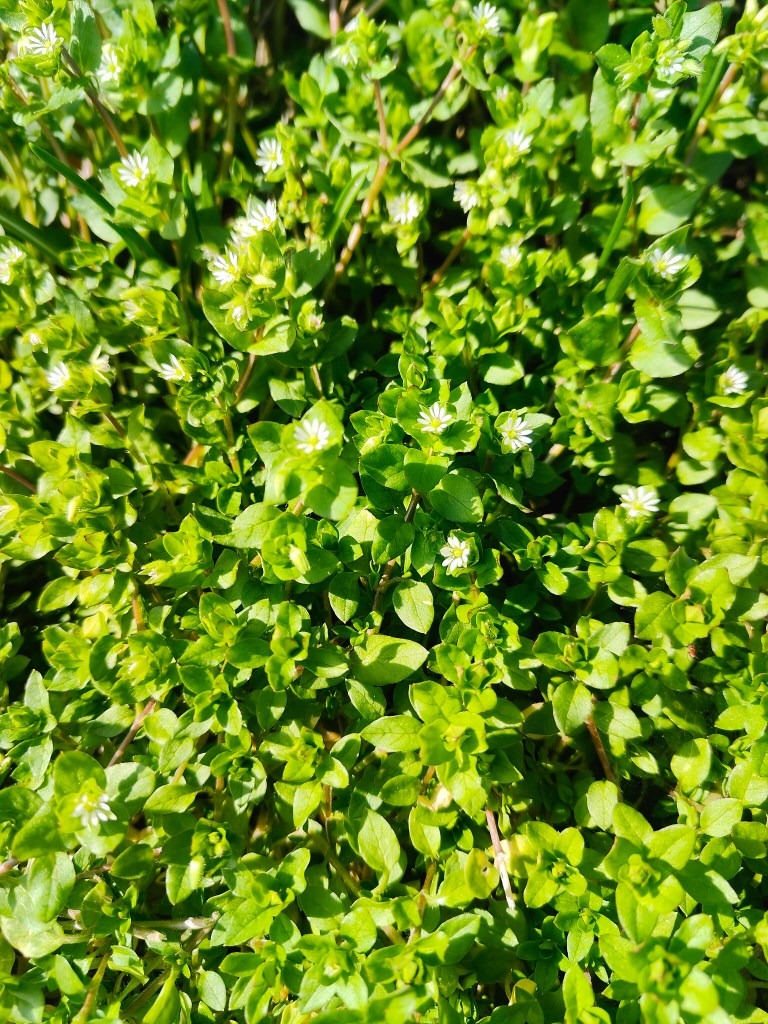
Chickweed has long been associated with the spring and with renewal due to its uses as an early spring tonic for hundreds of years. Its folk names (starwort, winterweed, birdweed, chickenwort, and others) tend to echo three specific aspects of its nature: being associated with chickens and other birds, the night sky, and the cold months of the year.
That chickweed is generally known as a friendly, nourishing plant spirit should hardly come as a surprise. Chickens can be seen to forage for this herb at the first signs of spring, feasting on its crunchy, water-filled stalks and leaves in order to help their bodies recover from the long stint of winter, which usually provides little fresh vegetation. This plant’s long association with chickens provides another key to its nature, for the common hen is a longstanding companion and ally to humans living in rural areas, offering eggs in exchange for protection and care. Most of us know the egg’s associations with spring and with the vernal equinox, and as one of the first plants that stimulates the hen’s system at winter’s end, chickweed can be considered an ally in egg production.
Because chickweed plants tend to grow together in great, intertwined masses, it is sometimes associated with relationships and community. The fact that it is also beloved by hens, who live their entire lives surrounded by a tightly bonded flock, emphasizes, in my view, that the type of love embodied in this plant is more communal or familial than romantic. This is perhaps splitting hairs, though, since bonds of mutual care can express themselves in a variety of ways.
The older name for this herb, starwort, appears to be inspired by its pale flowers, which resemble small stars peeking out from the wet spring ground. Interestingly, the leaves are known to shift their posture by night, closing their leaves slightly around the tips of their stalks to protect new growth from frost, an adaptation well-suited to the cold environments in which it thrives. This may be the root of its occasional folk name tongue grass, though this name is also applied to other plants as well. This nocturnal movement and star-emblemed appearance suggest that this herb is possessed of a strong lunar nature, being an earthly reflection of the starry night sky that mirrors cycles of sleep. The juice-filled body of this herb has long been associated with comfort and soothing due to its myriad medicinal uses.
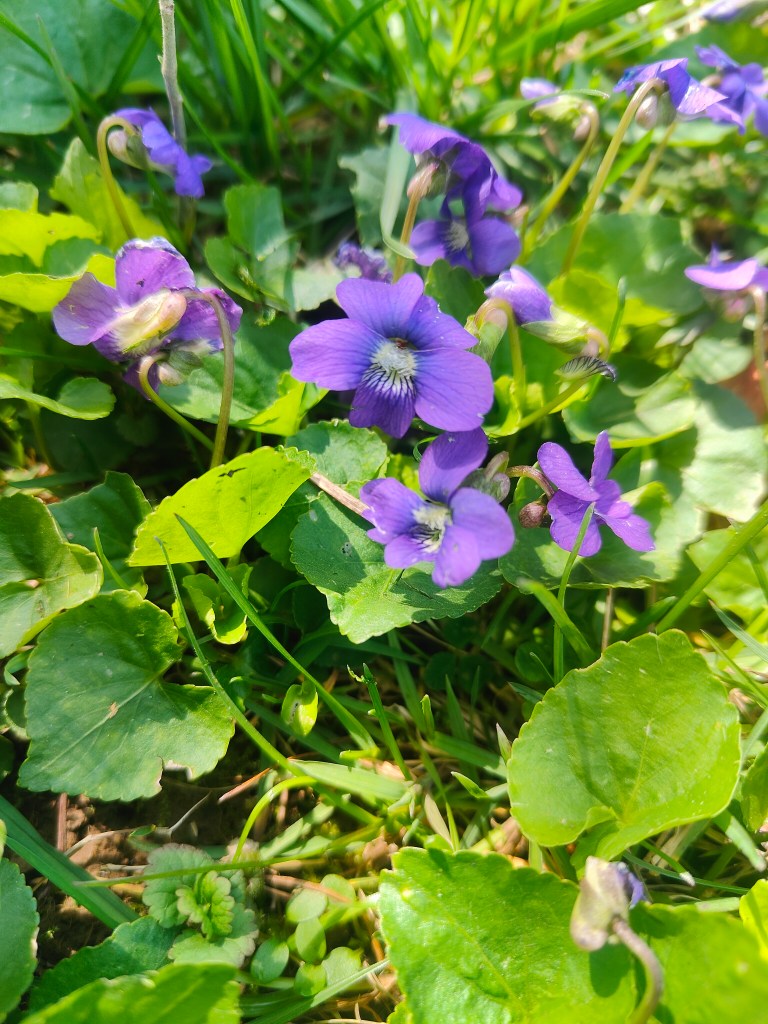
Violet‘s most famous quality is the gentle fragrance of its flowers, which have for hundreds of years been used as a perfume ingredient and as a culinary one as well, the fresh flowers being made into jellies, syrups, and candies. Here we must differentiate between the sweet violet (viola odorata), which is scented, and the dog violet (viola riviniana), which is unscented, though no less beautiful. The greater part of the plant’s folklore is likewise related to either the sweet scent or the vivid color of violet flowers, which have been associated with love and desire, but also with the qualities of concealment and secrecy. These qualities are embodied in the plant’s tendency to go unnoticed due to its preference for shade and its short stature, being easily overlooked so low to the ground in its favorite sunless patches.
The violet was prized in ancient times, even mentioned in legends as a perfume used by Aphrodite in order to win the adoration of Paris. Even hundreds of years ago, violet is noted as a “bridal flower” often included in the celebrations of marriage. In the spring (and sometimes autumn), the flowers of the violet are strikingly beautiful and fiercely colored, attracting early pollinators to partake of its sweetness. The heart-shaped leaves of the violet appear in the folk magical practices of many cultures, being pinned or sewn to clothing or simply carried to attract love and harmony.
This plant’s Victorian associations with modesty are distilled in the common phrase “shrinking violet,” used to refer to persons plagued by shyness. In actuality, the mythic origins of this association have less to do with shyness and more to do with arts of concealment for the sake of defense and protection. Its Greek name is supposedly derived from Ion, taken after the nymphs of the ancient region of Ionia. Myth tells us that Diana, goddess of the moon, transformed one of her nymphs into the violet flower in order to help her escape the (presumably sexual) pursuit of her brother, Apollo, god of the sun. Alternately, legends say that Zeus transformed the priestess Io into the form of a cow in order to escape the wrath of Hera, and the first plant which sprung of its own accord to feed her was the violet.
In both of these tales, the violet embodies a potency of concealment that is sometimes necessary and useful, especially to those pursued by vengeful lovers and dangerous predators. These myths, as well as the violet’s love of cool shade, were often interpreted in Victorian flower-lore to suggest a symbolism of modesty, shyness, and reserve. The violet’s true potency in this aspect, however, lies in the concealment of what is beautiful and vulnerable for protective purposes.
Though the scented and unscented varieties of violet are sometimes confused, both are closely related and bear similar magical properties, though the sweet violet’s uses are perhaps more potent in workings of an amorous nature than the dog violet.
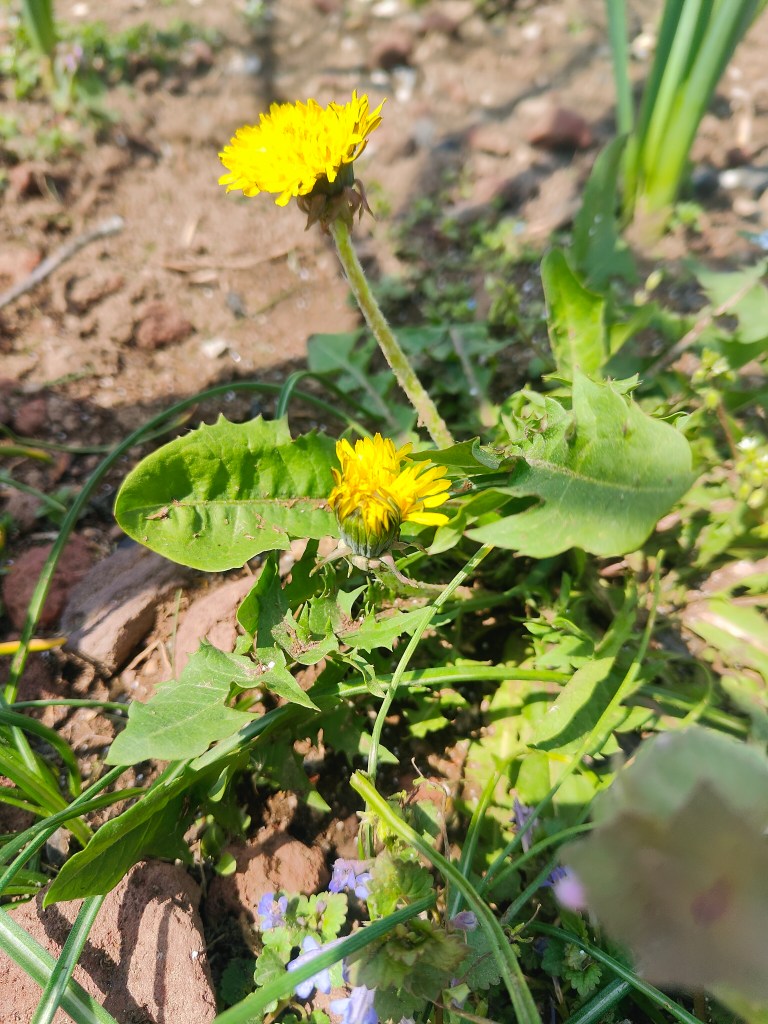
Dandelion’s folkloric associations are vast and quite old, and its myriad uses reveal this plant to possess a great many aspects, some of them seemingly paradoxical. Its properties tend to revolve, however, around a few central points: its associations with wish-making and divination, its surprising connection to both solar and saturnine powers, and its “toothed” properties as a protective plant.
The humorous names piss-a-bed and wet-a-bed are referenced in herbals as early as the 1600s, owing both to its diuretic properties and to the staining pigment in the bright, golden flowers. It is common even today for children to prank each other by rubbing the flower heads on one another’s skin or clothing, resulting in a stain that doesn’t really look much like urine, but makes them giggle nonetheless.
Vulgar names aside, dandelion’s most commonly known use in folk magic stems from its round, tufted head of seeds that emerges after the flower has closed and matured. For this reason, it is sometimes called blowball. In folklore, the blowing of dandelion seeds (very much like the blowing of thistle seeds) is performed for a variety of purposes. When making a wish, the goal is to blow as many of the seeds as possible into the wind to encourage the desired outcome. In divination, the number of seeds left on the head after blowing is interpreted in a variety of ways: yes or no answers (many or few seeds remaining), the number of days until a specified event will occur, or the number of years left in one’s life.
This last usage emphasizes an important aspect of dandelion’s nature, being both a solar herb, possessed of the joyful and wholesome potencies of the sun, and a saturnine one, associated with the chthonic realms and the spirits of the dead. While the dandelion’s flowers mirror the form of the sun, it grows a long and deep taproot, reaching into the dark earth below to a greater extend than other plants of its size. These roots twist and wind in a manner similar to mandrake. That this plant is an intermediary between realms is also signaled by its wind-blown seeds, which give away its mercurian and psychopompic qualities. Dandelion’s personality is such an interesting contrast, being both joyful and macabre at the same time.
The very name dandelion is derived from the French dent-de-lion, referencing the tooth of a lion. This moniker is owed to the shape of its leaves, which are jagged in the manner of a cat’s teeth. Although its uses in contacting spirits, divining guidance, and wish-making are all well-known, this plant has a strong protective quality to it as well. We would do well not to mistake the dandelion’s cheerful demeanor as being entirely passive (or toothless).
 Roger J. Horne