The latter half of winter is a time of weariness, isn’t it? The Yuletide season is over, and without its glimmering lights and spirit of warmth, the darkness and cold stare back at us with their hollow gaze. We’re full of ache and sleep, not quite ready for the return of summer, but also tired of winter’s gray. It is for this very reason, in part, that the folk traditions of Candlemas and St. Brigid’s Day endure: to abate the bitter cold with arts of prediction and illumination.
I’ve said it before, and I’ll say it again: there is no conflict between Christian folk traditions and old folk witchery, for these practices are deeply enmeshed and entangled. The difference often lies only in the manner of approach. While Christian observation of Candlemas or St. Brigid’s Day stems from a deep belief in Christ, folk witches often include the magical aspects of these traditions in the spirit of heresy and subversion, for the pagan incorporation of liturgy into folk magic was actively punished in previous ages. Other witches regard these traditions more as cultural artifacts that are a part of who we are and where our ancestors come from. Some folk witches even identify Christians themselves, often with caveats and context to help other pagans understand, and for them, these festivals are points in the year that touch both threads of their making: the witch and the believer, both held sacred simultaneously in the moment of ritual. All of these approaches are beautiful and valid and worth preserving today, for hundreds of years ago, all of them would have been echoed by our ancestors, who surely had varied and complex feelings about the ways pagan spirituality mingled with the growing power of the church.
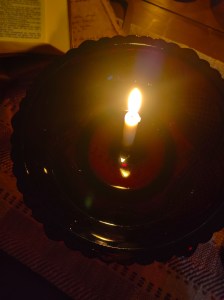
Candlemas, celebrated in churches as the Presentation, is also a time to bless candles for the coming year, and this is one of the traditions incorporated into folk witchery to this day. It aligns closely with St. Brigid’s Day, reminding us of the pagan roots of many of our traditions. For cunning folk and other charmers in the early modern period, candles brought home with a liturgical blessing on this day were believed to hold a special potency, and the uses for these candles weren’t always aligned with the intentions of the church. Similarly, witches today may choose to bless their own candles for magical use in any number of ways. In recent years, I’ve grown fond of calling Brigid’s potency into a single, central candle as I light it, then lighting the others from its wick. Even a single candle alone will do in a pinch. What matters is that the incantatory call is true and the feeling is right. Old words are helpful, too, like the following, adapted loosely from the Carmina Gadelica, a collection of Scottish charms:
I light this flame in Our Lady’s name
to bring warmth to the earth again.
The encirclement of Our Lady
be about this place
on this night, and every single night.
Another adaptation of my own, also drawing on the language of the Carmina Gadelica, names Brigid and Mary:
I will light this flame
as Brigid would, as Mary would.
The encirclement of Brigid and Mary
be about this place, on the household all,
to save, to shield, to surround,
the hearth, the house, the household,
this eve, this night, and every single night.
Groundhog Day, too, in the United States and Canada, derives, at least in part, from Candlemas traditions. On Groundhog Day, it is said that one can predict the weather by observing the reaction of a groundhog as he emerges from his den. If he sees his shadow (meaning the sun is shining), there will be more winter yet to come. If he does not, winter will soon be over. Other, similar traditions rely on different creatures for prediction, including badgers, serpents, or other animals that emerge from a hole in the ground. One Scottish saying offers the connection to the old Candlemas traditions more clearly:
If Candlemas Day be fair and clear,
there’ll be twowinters in the year.
If Candlemas Day be foul and rain,
winter will not come again.
While it isn’t practical for most of us to crouch around a chthonically-inclined creature’s home for hours and hours, we can certainly observe the weather where we live, perhaps even engaging in the fine arts of divination in order to offer some illumination on our circumstances and our journeys. This would be quite in line with the folk traditions of Candlemas.
However you draw on the bright tide of this time, in whatever way your culture and ancestors afford you, and by whatever paths you are called to this art, may your late winter days be gentle and full of hope.
 Roger J. Horne