The horseshoe hung above the door, the salt thrown over the left shoulder, the clocks stopped in a house where someone has died: all of these have been described as old wives’ tales and, more commonly, as superstitions. For the shrewd folk witch, however, these bits of lore are more than mere archaisms and oddities; they are cultural treasures preserved over generations, often carrying within them a hidden potency, a source that may be tapped in times of need, a magical guide no less valuable than a rare tome.
One of the most common challenges faced by those new to the path of folk witchery is the process of building a personal craft that is specific to one’s culture and heritage. Reading folktales, researching one’s ancestors and their lands, and spending time with the flora and fauna around us are all valuable pursuits to this end, but the sheer practical value of superstition is impossible to overstate. By peering deeply into these treasures–not merely reading them, but contemplating their symbolism–we can derive a wealth of charms that come from who we already are, that are rooted in our very being. Charms of this nature are always, in my experience, easier to access than lofty, ornate rituals because they feel effortless and natural to the practitioner, lending themselves to almost endless adaptation and improvisation.
Take, for example, the blowing of dandelion or thistle seeds (depending on where you are), which is a form of wish-making superstition. To access the hidden potency of this charm, we must look more closely. By means of the witch’s own breath, the seeds of the plant are carried away to germinate and propagate the land. The very breath that speaks the wish is able to accelerate the plant’s proliferation. What better offering could there be for a seed-bearing plant, a being that wants, more than anything, to multiply and thrive? Perhaps we can speak more directly with this plant spirit. Perhaps the spirit can hear us. Perhaps we can analyze the nature of this plant (solar, saturnine, mercurial) to discern what sorts of powers might lie within its nature. Even a simple charm, if it is worked from a place of deep understanding, can be potent.
It was Cicero, in his ancient treatise De Natura Deorum, who originated the word superstitio to describe an overabundance of care in spiritual matters. He contrasted this with religio, meaning proper observance. As is often the case, we see here the concept of improper spiritual practice defined by its deviation from dominant religion. This was no less true for the vehement anti-Catholic sentiments of early modern Scotland, where many executed for witchcraft practiced simple healing charms and folk magics peppered with Catholic influence. It is the new religion risen to power that defines what is “religion” and what is “superstition” for the people. And it is the witch who chooses for herself, heedless of authorities, what is most useful.
For those of us on the folk path, superstitions are usually our earliest education in the magical arts. Many of us have learned from parents or grandparents what objects or signs confer the property known as “luck” (derived from the Middle Dutch luc, meaning good fortune). For our ancient ancestors, whose cosmology was both pagan and animist, fortune came from a host of powerful spirits who viewed human actions as either pleasing or displeasing. It is reasonable to discern from this that having luck, for the modern pagan, means perhaps more than mere serendipity. Perhaps it speaks to having good relationships with the spirits around us, to preserving small rituals and traditions that please them, to procuring, in some small way, their favor–or at the very least, preserving acts that in some way invoke the remembrance of them.
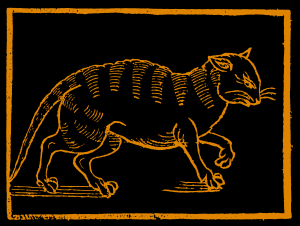
Conversely, and perhaps confusingly, many witches favor signs that may have been traditionally viewed as bad luck to previous generations, usually because these things were associated with, well, witches. In the Appalachian region, black cats have been associated with witches for hundreds of years in traditional lore, and while they have also been viewed as bad luck, many modern witches favor them for this reason. One man’s bad luck may prove another man’s good luck, it seems, particularly for a witch, since part of our very nature is rebellious and countercultural. And really, let’s be honest: black cats are simply precious.
For witches interested in researching superstitions in their own culture, I recommend two things. First, conduct a little exercise in self-inventory. Note the superstitions you remember from childhood, everything from the breaking of mirrors to finding holed stones. Some traditions that may seem mundane to you may actually be quite unique, but without identifying them and researching them, you may be ignoring treasures you already possess, preserved by ancestors from hundreds of years in the past. Second, of course, is the library. Collections of superstitions by folklorists aren’t difficult to find. People consider them amusing, but they almost never actually read them. They’re usually gathering dust on library shelves or sitting unread on someone’s coffee table. It’s a funny thought, actually: so many people wish to know magical secrets, to feel privy to ancient knowledge, to feel empowered, and meanwhile, the magical treasures of previous centuries are just there, so very near–for those who can recognize them.
 Roger J. Horne